

Determining the appropriate batch size for a paste mixer machine is a crucial aspect of ensuring efficient and high - quality production in various industries, such as electronics manufacturing, pharmaceuticals, and food processing. As a supplier of paste mixer machines, I understand the challenges that customers face in making this decision. In this blog, I will share some key factors and methods to help you determine the appropriate batch size for your paste mixer machine.
Factors Affecting Batch Size Determination
1. Production Volume Requirements
The first and most obvious factor is your production volume requirements. You need to consider how much paste you need to produce within a specific time frame. If you have a large - scale production line that requires a continuous supply of paste, a larger batch size may be more suitable. For example, in an electronics manufacturing plant that produces thousands of printed circuit boards (PCBs) per day, a large - batch paste mixer can ensure a steady supply of SMT solder paste. On the other hand, if your production is more sporadic or you are producing small - scale, customized products, a smaller batch size may be sufficient.
2. Mixing Uniformity
Mixing uniformity is another critical factor. The paste mixer machine needs to ensure that all components of the paste are evenly mixed. If the batch size is too large, it may be difficult for the mixer to achieve uniform mixing. This can lead to inconsistencies in the final product quality. For instance, in the production of pharmaceutical pastes, non - uniform mixing can result in variations in the dosage of active ingredients, which is a serious quality issue. In general, the mixer's design and power determine its ability to handle different batch sizes while maintaining mixing uniformity.
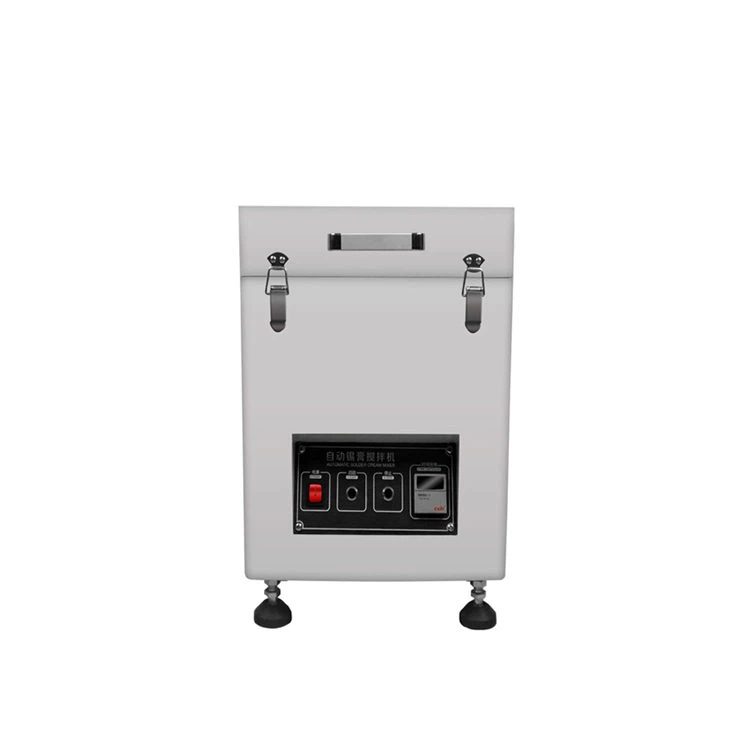
3. Machine Capacity
The physical capacity of the paste mixer machine is a limiting factor. Each machine has a maximum and minimum batch size it can handle. Exceeding the maximum capacity can put excessive stress on the machine, leading to mechanical failures and reduced lifespan. Using a batch size that is too small may not fully utilize the machine's capabilities, resulting in inefficient operation. You should refer to the manufacturer's specifications to understand the machine's capacity range.
4. Material Characteristics
The characteristics of the paste materials also play a role in batch size determination. Some materials may be more viscous or have a tendency to clump together, which can affect the mixing process. For highly viscous pastes, a smaller batch size may be necessary to ensure proper mixing. Additionally, if the materials are sensitive to heat or oxidation, a smaller batch size can reduce the exposure time during the mixing process, minimizing the risk of material degradation.
5. Cost Considerations
Cost is an important aspect of batch size determination. There are two main cost factors to consider: production cost and inventory cost. Larger batch sizes can sometimes lead to lower production costs per unit due to economies of scale. However, they also result in higher inventory costs as more paste needs to be stored. You need to find a balance between these two costs to optimize your overall production cost.
Methods for Determining Batch Size
1. Trial and Error
One of the simplest methods is trial and error. Start with a small batch size and gradually increase it while monitoring the mixing quality and machine performance. Observe the uniformity of the paste, the mixing time, and any signs of machine stress. Based on these observations, you can determine the optimal batch size. This method is time - consuming but can provide accurate results for your specific production requirements.
2. Calculation Based on Machine Specifications
You can also calculate the appropriate batch size based on the machine's specifications. Most paste mixer machines come with information about their power, mixing speed, and recommended batch size range. You can use this information to estimate the batch size that will ensure efficient operation. For example, if the machine has a power rating of X kilowatts and a recommended mixing speed of Y revolutions per minute, you can calculate the batch size based on the relationship between power, speed, and the volume of paste.
3. Industry Standards and Best Practices
Researching industry standards and best practices can also provide valuable insights. Different industries may have established guidelines for batch size in paste mixing. For example, in the SMT solder paste industry, there are standards regarding the batch size that can ensure consistent solderability and quality. You can refer to industry associations, technical papers, and case studies to learn about these standards and apply them to your production.
Importance of Choosing the Right Batch Size
Choosing the right batch size has several benefits. Firstly, it ensures high - quality products. Uniformly mixed paste leads to consistent product performance, which is crucial in industries where product quality is of utmost importance, such as electronics and pharmaceuticals. Secondly, it improves production efficiency. An appropriate batch size allows the paste mixer machine to operate at its optimal level, reducing mixing time and energy consumption. Finally, it helps to control costs. By balancing production and inventory costs, you can achieve cost - effective production.
Our SMT Solder Mixing Machine
As a paste mixer machine supplier, we offer a wide range of high - quality paste mixer machines, including the SMT Solder Mixing Machine. Our SMT solder mixing machines are designed to meet the specific requirements of the electronics manufacturing industry. They are equipped with advanced mixing technology to ensure uniform mixing of solder paste, even for small or large batch sizes. With our machines, you can achieve high - quality solder joints and improve the overall efficiency of your SMT production line.
Conclusion
Determining the appropriate batch size for a paste mixer machine is a complex process that requires careful consideration of multiple factors. By taking into account production volume requirements, mixing uniformity, machine capacity, material characteristics, and cost considerations, and using methods such as trial and error, calculation based on machine specifications, and following industry standards, you can find the optimal batch size for your production. If you are in need of a paste mixer machine or have any questions about batch size determination, please feel free to contact us. We are here to provide you with professional advice and high - quality products to meet your production needs.
References
- [Author, A. B. (Year). Title of the book. Publisher.]
- [Author, C. D. (Year). Article title. Journal name, Volume(Issue), Page numbers.]
- [Industry Association. (Year). Industry standards for paste mixing. Retrieved from [Website URL]]


