As a supplier of paste mixer machines, I've witnessed firsthand the crucial role that shear force plays in the mixing process. Shear force is a fundamental concept in fluid mechanics and materials science, and its understanding is essential for optimizing the performance of paste mixer machines. In this blog post, I'll delve into what shear force is in a paste mixer machine and how it affects the mixing process.
What is Shear Force in a Paste Mixer Machine?
Shear force in a paste mixer machine refers to the force that causes adjacent layers of a fluid or paste to slide past one another. When a paste mixer operates, it typically uses rotating blades, paddles, or other mixing elements to move the paste within the mixing chamber. As these mixing elements move through the paste, they create regions of different velocities within the material. The difference in velocity between adjacent layers of the paste generates a shearing action, which is characterized by the shear force.
Mathematically, shear force (F) can be related to the shear stress (τ) and the area (A) over which the stress acts: F = τA. Shear stress is defined as the force per unit area parallel to the direction of the shearing motion. In the context of a paste mixer, the shear stress is influenced by factors such as the speed of the mixing elements, the viscosity of the paste, and the geometry of the mixing chamber.
How Shear Force Affects Mixing
Dispersion of Particles
One of the primary effects of shear force in a paste mixer is the dispersion of particles. Many pastes, such as solder pastes used in SMT Solder Mixing Machine, contain solid particles suspended in a liquid or semi - liquid matrix. These particles may agglomerate or clump together, which can affect the uniformity and performance of the paste.
The shear force generated by the mixing elements helps to break up these agglomerates. As the mixing blades or paddles move through the paste, the shearing action applies a force to the agglomerates, causing them to separate into individual particles. This results in a more homogeneous distribution of particles within the paste, which is crucial for applications where consistent particle size and distribution are required.
Homogenization of Components
In addition to particle dispersion, shear force also plays a vital role in homogenizing different components of the paste. Pastes often consist of multiple ingredients, such as resins, solvents, and additives, each with different physical and chemical properties. These components may have a tendency to separate or form distinct phases within the paste if not properly mixed.
The shearing action created by the mixer helps to blend these components together. By applying shear force, the mixer forces the different components to interact and mix at a molecular level. This leads to a more uniform distribution of the components throughout the paste, ensuring that the final product has consistent properties and performance.
Viscosity Modification
Shear force can also affect the viscosity of the paste. Viscosity is a measure of a fluid's resistance to flow, and it can have a significant impact on the handling and application of the paste. In some cases, the initial viscosity of the paste may be too high, making it difficult to mix or apply.
When shear force is applied to the paste, it can cause the viscosity to decrease. This phenomenon is known as shear - thinning or pseudoplastic behavior. As the mixing elements move through the paste, the shearing action aligns the molecules or particles in the paste, reducing the internal resistance to flow. This results in a lower viscosity, which makes the paste easier to mix and dispense.
On the other hand, in some materials, shear force can cause an increase in viscosity, a phenomenon known as shear - thickening or dilatant behavior. Understanding the shear - viscosity relationship of the paste is crucial for selecting the appropriate mixer and operating conditions to achieve the desired viscosity for the application.
Reaction Kinetics
In pastes where chemical reactions are involved, such as in some epoxy or adhesive pastes, shear force can influence the reaction kinetics. The shearing action can enhance the contact between reactants, increasing the frequency of molecular collisions and thus accelerating the reaction rate.
By promoting better mixing and dispersion of the reactants, shear force ensures that the chemical reaction occurs more uniformly throughout the paste. This can lead to a more consistent curing or setting time, as well as improved mechanical and chemical properties of the final cured product.
Factors Affecting Shear Force in a Paste Mixer Machine
Mixer Design
The design of the paste mixer has a significant impact on the shear force generated. Different types of mixers, such as planetary mixers, high - shear mixers, and double - arm mixers, have different mixing mechanisms and geometries, which result in different levels of shear force.
For example, high - shear mixers are specifically designed to generate high levels of shear force. They typically have small - diameter, high - speed rotating blades or rotors that create intense shearing action in a localized area. Planetary mixers, on the other hand, combine the rotation of the mixing blades with the revolution of the mixing bowl, providing a more gentle but thorough mixing action with moderate shear force.
Mixing Speed
The speed at which the mixer operates is another important factor affecting shear force. Generally, higher mixing speeds result in higher shear forces. As the speed of the mixing elements increases, the difference in velocity between adjacent layers of the paste also increases, leading to a greater shearing action.
However, it's important to note that increasing the mixing speed too much can have negative effects. Excessive shear force can cause damage to the particles in the paste, such as breaking them into smaller fragments or altering their surface properties. It can also generate excessive heat, which may affect the chemical stability of the paste.
Paste Viscosity
The viscosity of the paste itself also affects the shear force. Higher - viscosity pastes require more force to mix and generate higher shear forces compared to lower - viscosity pastes. This is because the internal resistance to flow in a high - viscosity paste is greater, and more energy is needed to overcome this resistance and create the shearing action.
Optimizing Shear Force for Effective Mixing
To achieve the best mixing results, it's important to optimize the shear force in the paste mixer. This involves selecting the appropriate mixer design, operating conditions, and understanding the properties of the paste.
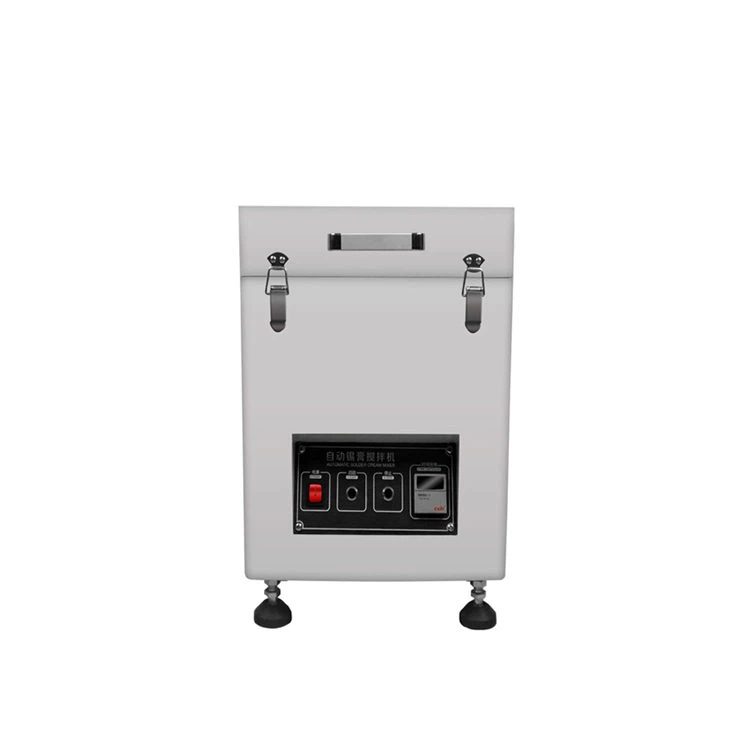
When selecting a mixer, consider the specific requirements of the paste, such as the particle size, viscosity, and the need for homogenization. For pastes with large agglomerates or high viscosity, a high - shear mixer may be more suitable. For more delicate pastes or those requiring gentle mixing, a planetary or double - arm mixer may be a better choice.
In terms of operating conditions, adjust the mixing speed based on the properties of the paste. Start with a lower speed and gradually increase it if necessary, while monitoring the temperature and the quality of the mixing. It's also important to control the mixing time to ensure that the paste is mixed thoroughly without over - shearing.
Conclusion
Shear force is a critical factor in the operation of paste mixer machines. It affects the dispersion of particles, homogenization of components, viscosity modification, and reaction kinetics of the paste. By understanding the role of shear force and how it is influenced by factors such as mixer design, mixing speed, and paste viscosity, we can optimize the mixing process to achieve high - quality, consistent results.
If you're in the market for a paste mixer machine or have questions about how shear force can impact your specific mixing application, I encourage you to reach out. Our team of experts is ready to assist you in selecting the right mixer and providing guidance on achieving the best mixing results. Contact us today to start a conversation about your paste mixing needs.
References
- "Handbook of Industrial Mixing: Science and Practice" by Edward L. Paul, Victor A. Atiemo - Obeng, and Suzanne M. Kresta.
- "Fluid Mechanics" by Frank M. White.
- "Mixing in the Process Industries" by H. P. R. Trägårdh.