

Hey there! I'm a supplier of SMT PNP machines, and today I wanna chat about the factors that can affect the placement quality of these machines. As someone who's been in this industry for quite a while, I've seen firsthand how these factors can make or break the performance of SMT PNP machines.
Let's start with the basics. What exactly are SMT PNP machines? Well, they're essential pieces of equipment in the electronics manufacturing process. SMT stands for Surface Mount Technology, and PNP refers to Pick and Place. These machines are used to pick up electronic components and place them accurately on a printed circuit board (PCB). You can learn more about SMT Surface Mount on our website.
Now, let's dive into the factors that can affect the placement quality of SMT PNP machines.
Component Characteristics
The components themselves play a huge role in placement quality. Different components have different shapes, sizes, weights, and surface finishes. For example, small and lightweight components are generally easier to pick up and place accurately than large and heavy ones. Components with irregular shapes or rough surfaces can also pose challenges.
The size and shape of the component's leads or terminals are also important. If the leads are too short or too thin, it can be difficult for the machine to grip them properly. On the other hand, if the leads are too long or bent, they may not fit correctly into the pads on the PCB.
Another factor to consider is the component's center of gravity. If the center of gravity is off - center, the component may tilt or rotate during the pick - and - place process, leading to inaccurate placement. You can find a wide range of components that our Pick and Placement Machine can handle efficiently.

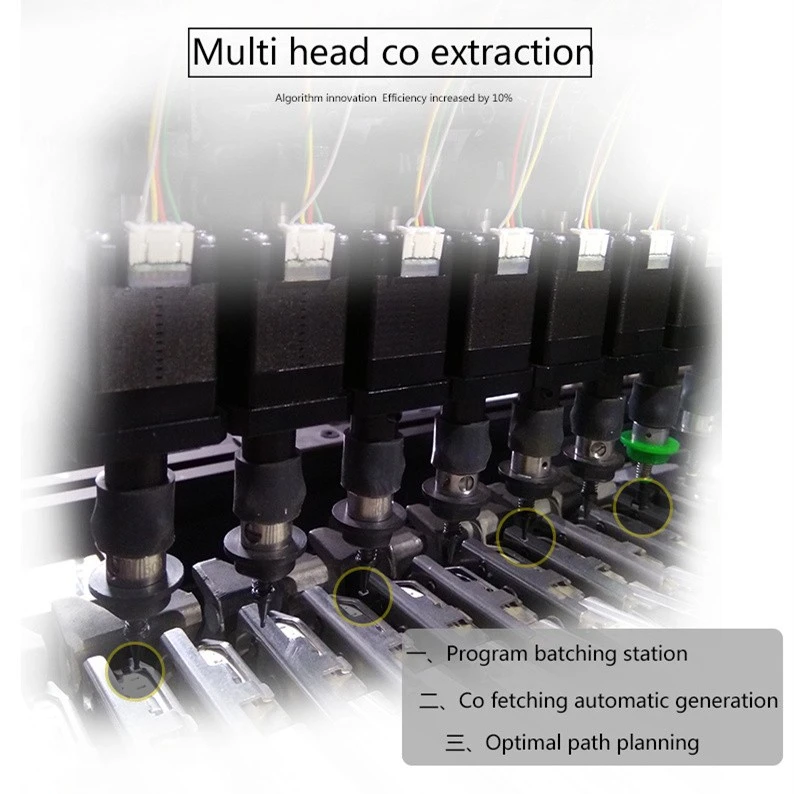
Machine Precision
The precision of the SMT PNP machine is crucial for high - quality placement. The machine's mechanical structure needs to be rigid and stable to minimize vibrations and movements during operation. Any small vibrations can cause the component to be placed slightly off - target.
The accuracy of the machine's motion control system is also vital. This includes the X, Y, and Z axes movements. The machine should be able to move precisely to the correct coordinates on the PCB. A high - resolution encoder is often used to ensure accurate positioning.
The nozzle of the pick - and - place head is another key part. The size and shape of the nozzle need to match the component being picked up. A nozzle that is too large or too small can lead to improper gripping or dropping of the component. Our SMT Chip Mounting Machine is designed with high - precision nozzles for optimal performance.
PCB Design
The design of the PCB can significantly impact the placement quality. The layout of the pads on the PCB is crucial. The pads should be the right size and shape to accommodate the component's leads or terminals. If the pads are too small, the component may not make proper contact, and if they are too large, it can lead to misalignment.
The spacing between the pads is also important. If the pads are too close together, there is a higher risk of short - circuits. On the other hand, if the spacing is too large, it can be difficult for the machine to place the component accurately.
The flatness of the PCB is another factor. A warped or uneven PCB can cause the component to be placed at an angle or not make proper contact with the pads. PCB manufacturers need to ensure that the PCBs are flat within an acceptable tolerance.
Feeder Performance
The feeder is responsible for supplying the components to the pick - and - place head. A malfunctioning feeder can lead to poor placement quality. The feeder should be able to feed the components smoothly and consistently.
The type of feeder used can also affect performance. There are different types of feeders, such as tape feeders, tray feeders, and stick feeders. Each type has its own advantages and disadvantages, and the choice depends on the type of components being used.
The feeder's alignment and calibration are crucial. If the feeder is not properly aligned, the component may not be presented to the pick - and - place head in the correct position, leading to inaccurate placement.
Environmental Conditions
The environment in which the SMT PNP machine operates can have a significant impact on placement quality. Temperature and humidity are two important factors. High temperatures can cause the components to expand, which may affect their size and shape. Low humidity can lead to static electricity, which can attract dust and cause components to stick together or be misaligned during placement.
Dust and debris in the environment can also cause problems. They can get into the machine's moving parts, such as the nozzles and feeders, and cause them to malfunction. A clean and controlled environment is essential for the proper operation of the SMT PNP machine.
Programming and Software
The programming of the SMT PNP machine is critical for accurate placement. The program needs to specify the correct coordinates for each component on the PCB, as well as the appropriate pick - and - place parameters.
The software used to control the machine should be user - friendly and have advanced features for error detection and correction. For example, the software can detect if a component is not picked up correctly or if it is placed in the wrong position and take corrective action.
Operator Skill
Last but not least, the skill of the operator can affect the placement quality. An experienced operator knows how to set up the machine correctly, troubleshoot problems, and make adjustments as needed.
The operator needs to be familiar with the machine's operation, programming, and maintenance procedures. They should also be able to identify and address any issues that arise during the placement process.
In conclusion, there are many factors that can affect the placement quality of SMT PNP machines. From component characteristics and machine precision to PCB design, feeder performance, environmental conditions, programming, and operator skill, every aspect needs to be carefully considered.
If you're in the market for a high - quality SMT PNP machine, we've got you covered. Our machines are designed to handle a wide range of components with high precision and reliability. Whether you're a small - scale electronics manufacturer or a large - scale production facility, we can provide the right solution for your needs.
If you're interested in learning more about our products or have any questions about SMT PNP machines, don't hesitate to get in touch with us. We're here to help you improve your production efficiency and placement quality. Let's start a conversation about how we can work together to meet your manufacturing requirements.
References
- "Surface Mount Technology Handbook" by Richard J. Paasche
- "Electronic Assembly and Packaging Handbook" by Paul T. Vianco


