Can a paste mixer machine be used for mixing pharmaceutical pastes? This is a question that many in the pharmaceutical industry often ponder, and as a paste mixer machine supplier, I'm here to provide a comprehensive answer.
Understanding the Basics of Paste Mixer Machines
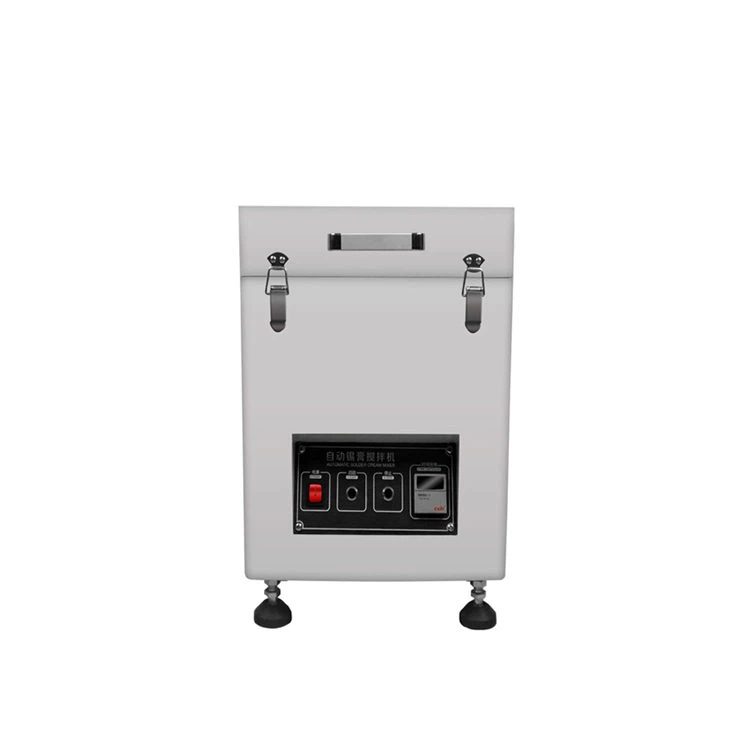
Paste mixer machines are designed to blend various substances into a homogeneous paste. They come in different types, including planetary mixers, double planetary mixers, and high - shear mixers, each with its own set of features and capabilities. These machines are widely used in industries such as food, cosmetics, and electronics. For instance, in the electronics industry, SMT Solder Mixing Machine is commonly used to mix solder pastes, ensuring a uniform distribution of solder particles in the flux medium.
The key functions of a paste mixer machine typically involve agitation, shearing, and kneading. Agitation helps to move the materials around in the mixing chamber, promoting interaction between different components. Shearing forces break down large particles and disperse them evenly throughout the paste, while kneading is used to further homogenize the mixture, especially for thick and viscous pastes.
Requirements for Mixing Pharmaceutical Pastes
Pharmaceutical pastes have unique characteristics and requirements. Firstly, they must meet strict quality and safety standards. The active pharmaceutical ingredients (APIs) in the paste need to be uniformly distributed to ensure consistent dosing and efficacy. Any uneven distribution can lead to ineffective treatment or potential side - effects.
Secondly, the mixing process should not introduce any contaminants. This means that the materials used in the construction of the mixer, such as the mixing blades and the inner chamber, must be made of materials that are compatible with pharmaceutical substances and can be easily cleaned and sterilized. Stainless steel is a common choice due to its corrosion resistance and ease of cleaning.
Thirdly, the mixer should be able to handle the specific viscosity of pharmaceutical pastes. Some pharmaceutical pastes can be highly viscous, requiring a mixer with sufficient power and appropriate mixing mechanisms to achieve thorough blending.
Suitability of Paste Mixer Machines for Pharmaceutical Pastes
In general, certain types of paste mixer machines can be used for mixing pharmaceutical pastes, but it depends on several factors.
Compatibility with Pharmaceutical Standards
As mentioned earlier, the materials of the mixer must be compliant with pharmaceutical regulations. For example, the mixer should be made of materials that do not leach any harmful substances into the paste. Additionally, the surface finish of the mixing chamber and blades should be smooth to prevent the accumulation of paste residues, which can harbor bacteria or contaminate subsequent batches.
Mixing Performance
The mixer should be able to achieve the required level of homogeneity. High - quality paste mixer machines are equipped with advanced mixing technology, such as variable speed controls and optimized blade designs. These features allow for precise control of the mixing process, ensuring that the APIs are evenly dispersed throughout the paste. For example, a planetary mixer can provide a combination of rotational and revolutionary motion, which is very effective in mixing viscous materials and achieving a high degree of uniformity.
Cleaning and Hygiene
Ease of cleaning is crucial in the pharmaceutical industry. A good paste mixer machine should have a design that allows for easy disassembly and cleaning of all components. Some mixers are equipped with clean - in - place (CIP) systems, which use automated cleaning processes to ensure thorough and consistent cleaning between batches.
Advantages of Using a Paste Mixer Machine for Pharmaceutical Pastes
- Efficiency: Paste mixer machines can significantly reduce the mixing time compared to manual mixing. This is especially important in large - scale pharmaceutical production, where time is of the essence. Automated mixing processes also reduce the risk of human error, ensuring consistent quality from batch to batch.
- Consistency: The precise control offered by paste mixer machines ensures that each batch of pharmaceutical paste has the same composition and properties. This is essential for maintaining product quality and meeting regulatory requirements.
- Scalability: As a pharmaceutical company grows, the ability to scale up production is crucial. Paste mixer machines can be easily adjusted to handle different batch sizes, from small - scale research and development to large - scale manufacturing.
Challenges and Considerations
- Initial Investment: High - quality paste mixer machines that meet pharmaceutical standards can be expensive. Companies need to carefully evaluate the cost - benefit ratio before making a purchase. However, the long - term benefits of improved efficiency, quality, and compliance often outweigh the initial investment.
- Validation and Calibration: In the pharmaceutical industry, all equipment must be validated to ensure that it performs as intended. This includes calibration of the mixer to ensure accurate mixing parameters. Validation and calibration processes can be time - consuming and require strict documentation.
- Product - Specific Requirements: Different pharmaceutical pastes may have unique properties, such as heat sensitivity or chemical reactivity. The mixer must be selected and configured to meet these specific requirements. For example, some pastes may require a low - temperature mixing process to prevent degradation of the APIs.
Conclusion
In conclusion, a paste mixer machine can be used for mixing pharmaceutical pastes, provided that it meets the strict requirements of the pharmaceutical industry. With the right machine, companies can achieve efficient, consistent, and high - quality production of pharmaceutical pastes. As a paste mixer machine supplier, we offer a range of products that are designed to meet the diverse needs of the pharmaceutical industry. Our machines are made of high - quality materials, equipped with advanced mixing technology, and designed for easy cleaning and maintenance.
If you are interested in learning more about our paste mixer machines for pharmaceutical paste mixing or would like to discuss your specific requirements, please feel free to contact us. We look forward to the opportunity to collaborate with you and contribute to the success of your pharmaceutical production.
References
- Pharmaceutical Manufacturing Handbook: Production and Processes. Willy A. Ritschel and Reinhard A. Bauer.
- Handbook of Cosmetic Science and Technology. Albert M. Kligman, Howard I. Maibach, and James G. Calandra.
- Mixing in the Process Industries. Edward L. Paul, Victor A. Atiemo - Obeng, and Suzanne M. Kresta.