

Can a paste mixer machine be used for mixing ceramic pastes? This is a question that often arises among professionals in the ceramics industry. As a supplier of paste mixer machines, I have encountered this query numerous times, and I am here to provide a comprehensive answer based on scientific knowledge and practical experience.
Understanding Ceramic Pastes
Ceramic pastes are complex mixtures that typically consist of ceramic powders, binders, solvents, and additives. These components need to be thoroughly mixed to achieve a homogeneous paste with consistent properties. The quality of the mixing process directly affects the performance of the final ceramic product. For example, in the production of ceramic tiles, a well - mixed paste ensures uniform color, strength, and surface finish.
The ceramic powders used can vary widely in particle size, shape, and chemical composition. Some may be fine - grained, while others are coarser. Binders are added to hold the ceramic particles together during the shaping and drying processes, and solvents are used to adjust the viscosity of the paste. Additives can be used to improve various properties such as plasticity, sinterability, and resistance to thermal shock.
Capabilities of Paste Mixer Machines
Paste mixer machines are designed to mix various types of pastes effectively. They come in different designs and configurations, including planetary mixers, double - arm mixers, and high - shear mixers. Each type has its own advantages and is suitable for different applications.
Planetary mixers are commonly used in many industries, including ceramics. They work by rotating the mixing blades around their own axis while also orbiting around the center of the mixing bowl. This dual - motion action ensures thorough mixing of the paste, reaching all corners of the bowl. The speed of rotation can be adjusted to accommodate different viscosities of the ceramic pastes. For less viscous pastes, a higher speed may be used to achieve a quick and efficient mix, while for more viscous ones, a lower speed can prevent excessive air entrapment.
Double - arm mixers have two counter - rotating blades that intermesh with each other. This design is particularly effective for mixing thick and sticky ceramic pastes. The intermeshing blades can break up agglomerates of ceramic powders and ensure that all components are evenly distributed throughout the paste.
High - shear mixers, on the other hand, use high - speed rotating blades to generate intense shear forces. These forces can break down large particles and disperse them evenly in the paste. They are suitable for ceramic pastes that require a high degree of dispersion, such as those used in advanced ceramic applications where fine particle size distribution is crucial.
Advantages of Using Paste Mixer Machines for Ceramic Pastes
- Homogeneous Mixing: One of the main advantages of using a paste mixer machine is the ability to achieve a homogeneous mixture. In ceramic production, a uniform paste is essential for consistent product quality. The mixer machines can ensure that the ceramic powders, binders, solvents, and additives are evenly distributed, reducing the risk of defects such as uneven shrinkage or cracking during the firing process.
- Time - Saving: Manual mixing of ceramic pastes is a labor - intensive and time - consuming process. Paste mixer machines can significantly reduce the mixing time, increasing the overall production efficiency. With the ability to mix large volumes of paste in a relatively short period, manufacturers can meet higher production demands.
- Controlled Mixing: Paste mixer machines allow for precise control of the mixing parameters such as speed, time, and temperature. This control is crucial for optimizing the properties of the ceramic paste. For example, by adjusting the mixing speed, manufacturers can control the degree of shear applied to the paste, which can affect the particle size distribution and the viscosity of the paste.
Considerations When Using Paste Mixer Machines for Ceramic Pastes
While paste mixer machines can be used for mixing ceramic pastes, there are some considerations that need to be taken into account.
- Material Compatibility: The materials used in the construction of the mixer machine should be compatible with the ceramic paste. Some ceramic pastes may be highly abrasive, and the mixing blades and bowls need to be made of materials that can withstand the wear and tear. For example, stainless steel is a commonly used material for mixer components due to its corrosion resistance and durability.
- Cleaning and Maintenance: After each use, the mixer machine needs to be thoroughly cleaned to prevent cross - contamination between different batches of ceramic pastes. Some ceramic pastes may dry quickly and harden on the mixing components, making cleaning more difficult. Regular maintenance of the machine, including lubrication of moving parts and inspection of electrical components, is also essential to ensure its proper functioning.
- Air Entrapment: During the mixing process, air can be entrapped in the ceramic paste, which can lead to defects in the final product. Paste mixer machines should be designed to minimize air entrapment. For example, some mixers are equipped with vacuum systems that can remove air from the paste during the mixing process.
Case Studies
Let's take a look at some real - world examples of how paste mixer machines are used in the ceramic industry. A ceramic tile manufacturer was facing issues with inconsistent color and surface finish in their tiles. After switching to a planetary paste mixer machine, they were able to achieve a more homogeneous ceramic paste. The dual - motion mixing action of the planetary mixer ensured that the colorants and other additives were evenly distributed throughout the paste. As a result, the quality of the tiles improved significantly, and the rejection rate decreased.
Another example is a company producing advanced ceramic components for electronic applications. They required a high - shear paste mixer to break down the agglomerates of ceramic powders and achieve a fine particle size distribution. The high - shear mixer was able to meet their requirements, and the resulting ceramic components had improved electrical properties.
Conclusion
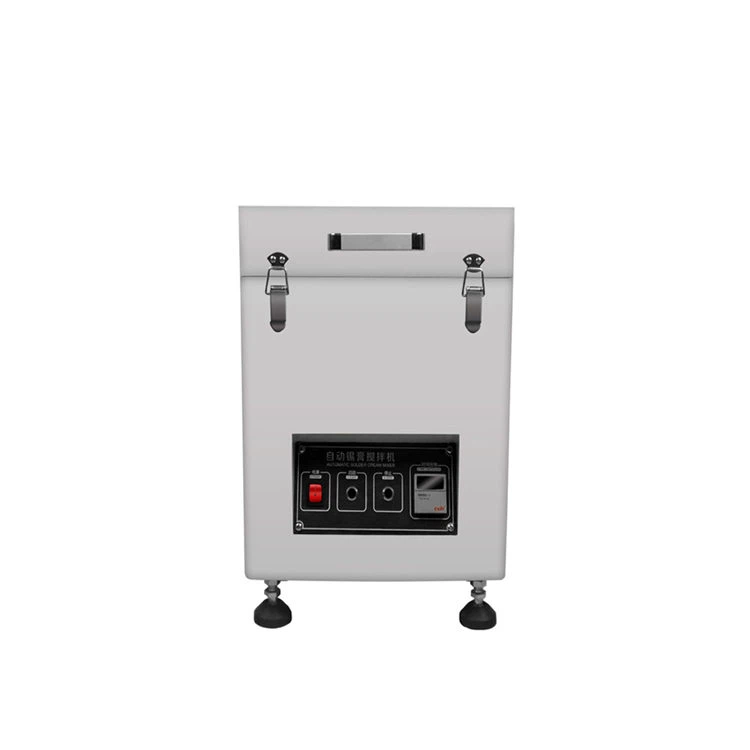
In conclusion, paste mixer machines can indeed be used for mixing ceramic pastes. They offer numerous advantages, including homogeneous mixing, time - saving, and controlled mixing. However, careful consideration needs to be given to material compatibility, cleaning and maintenance, and air entrapment. As a supplier of paste mixer machines, we have a wide range of products that are suitable for different types of ceramic pastes. Our SMT Solder Mixing Machine is just one example of our high - quality mixing solutions.
If you are in the ceramics industry and are looking for a reliable paste mixer machine for your ceramic paste mixing needs, we would be happy to assist you. Our team of experts can provide you with detailed information about our products and help you choose the most suitable mixer for your specific application. Contact us today to start a discussion about your requirements and explore how our paste mixer machines can improve your ceramic production process.
References
- "Ceramic Processing and Sintering" by Randall M. German
- "Mixing in the Process Industries" by Paul J. Middelberg and Peter J. Scales


