

A paste mixer machine is an essential piece of equipment in various industries, including electronics manufacturing, food processing, and pharmaceuticals. As a leading supplier of paste mixer machines, I am often asked about how these machines work. In this blog post, I will provide a detailed explanation of the working principles of a paste mixer machine, highlighting its key components and the processes involved.
Key Components of a Paste Mixer Machine
Before delving into how a paste mixer machine works, it's important to understand its main components. These components work in harmony to ensure efficient and effective mixing of pastes.
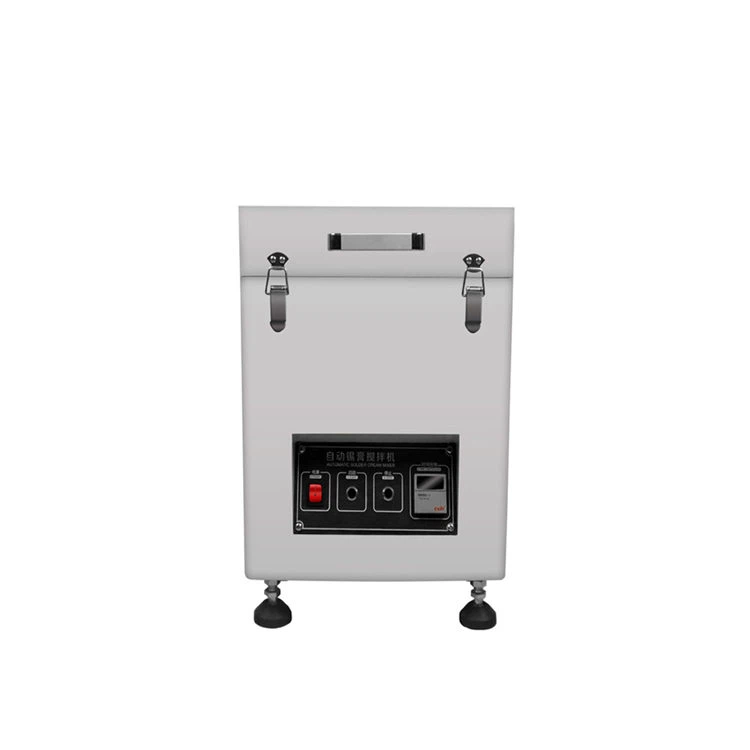
- Mixing Chamber: This is the heart of the paste mixer machine. It is where the raw materials are placed for mixing. The chamber is designed to withstand the forces generated during the mixing process and is often made of high - quality stainless steel to prevent corrosion and contamination.
- Mixing Blades: The mixing blades are responsible for physically blending the paste ingredients. There are different types of blades, such as paddle blades, helical blades, and planetary blades, each designed for specific mixing requirements. Paddle blades are suitable for gentle mixing, while helical blades can provide more intense agitation. Planetary blades, on the other hand, rotate on their own axis while also orbiting around the mixing chamber, ensuring thorough mixing.
- Drive System: The drive system powers the mixing blades. It typically consists of an electric motor, a gearbox, and a shaft. The motor provides the necessary power, and the gearbox adjusts the speed and torque of the blades according to the mixing requirements.
- Control Panel: The control panel allows operators to set and adjust various parameters of the mixing process, such as mixing time, speed, and temperature. It provides a user - friendly interface for easy operation and monitoring of the machine.
The Working Process of a Paste Mixer Machine
The working process of a paste mixer machine can be divided into several steps:
Loading the Ingredients
The first step is to load the raw materials into the mixing chamber. These materials can include powders, liquids, and additives. The quantity and proportion of each ingredient are carefully measured according to the specific recipe. For example, in the production of SMT Solder Mixing Machine, solder powder, flux, and other additives are loaded in precise amounts to ensure the quality of the final solder paste.
Pre - Mixing
Once the ingredients are loaded, the pre - mixing stage begins. The mixing blades start rotating at a relatively low speed to gently combine the ingredients. This initial mixing helps to break up any large clumps and distribute the ingredients evenly throughout the chamber. During this stage, the control panel monitors the temperature and speed of the blades to ensure optimal conditions.
Main Mixing
After the pre - mixing, the main mixing stage commences. The speed of the mixing blades is increased to achieve a more thorough and homogeneous blend. Depending on the type of paste and the mixing requirements, the blades may operate at different speeds and for varying durations. For instance, in the food industry, a paste mixer machine may need to mix ingredients for a longer time to ensure proper emulsification and flavor distribution.
Homogenization
In some cases, after the main mixing, a homogenization process is carried out. Homogenization is used to reduce the particle size of the ingredients and create a more uniform texture. This is particularly important in industries such as cosmetics and pharmaceuticals, where a smooth and consistent product is required. Some paste mixer machines are equipped with additional homogenizing devices, such as high - pressure homogenizers, to achieve this.
Discharging
Once the mixing and homogenization processes are complete, the final paste is discharged from the mixing chamber. The discharge mechanism can vary depending on the design of the machine. Some machines use gravity to discharge the paste, while others are equipped with pumps or conveyors to transfer the paste to the next stage of production.
Factors Affecting the Mixing Process
Several factors can affect the performance of a paste mixer machine and the quality of the final product:
- Ingredient Properties: The physical and chemical properties of the ingredients, such as particle size, density, viscosity, and solubility, can significantly impact the mixing process. For example, ingredients with high viscosity may require more powerful mixing blades and longer mixing times.
- Mixing Speed and Time: The speed and duration of the mixing process are crucial for achieving a homogeneous blend. If the mixing speed is too low or the time is too short, the ingredients may not be fully mixed. Conversely, if the speed is too high or the time is too long, it may lead to over - mixing, which can damage the product.
- Temperature and Pressure: Temperature and pressure can also affect the mixing process. Some ingredients may require specific temperature conditions to dissolve or react properly. In addition, changes in pressure can influence the flow and dispersion of the ingredients.
Applications of Paste Mixer Machines
Paste mixer machines are widely used in various industries:
- Electronics Manufacturing: In the electronics industry, SMT Solder Mixing Machine are used to produce solder paste, which is essential for surface - mount technology (SMT). The precise mixing of solder powder and flux ensures reliable soldering connections on printed circuit boards (PCBs).
- Food Processing: In the food industry, paste mixer machines are used to mix ingredients for products such as sauces, dressings, and spreads. They can handle a wide range of viscosities and ensure consistent flavor and texture.
- Pharmaceuticals: In the pharmaceutical industry, paste mixer machines are used to produce ointments, creams, and other semi - solid dosage forms. The thorough mixing of active ingredients and excipients is crucial for ensuring the efficacy and safety of the drugs.
- Cosmetics: In the cosmetics industry, paste mixer machines are used to mix ingredients for products such as lotions, creams, and makeup. They help to achieve a smooth and homogeneous texture, which is important for product quality and consumer satisfaction.
Conclusion
In conclusion, a paste mixer machine is a complex but highly efficient piece of equipment that plays a vital role in many industries. By understanding its key components, working processes, and the factors that affect the mixing process, operators can optimize the performance of the machine and produce high - quality paste products.
As a leading supplier of paste mixer machines, we are committed to providing our customers with reliable and efficient equipment. Our machines are designed to meet the diverse needs of different industries and are equipped with advanced features for precise control and monitoring. If you are interested in purchasing a paste mixer machine or have any questions about our products, please feel free to contact us for further discussion and procurement negotiation.
References
- "Mixing Technology Handbook" by Paul H. Cooper, A. B. Metzner, and A. E. Laird
- "Food Process Engineering and Technology" by Gustavo V. Barbosa - Canovas, Maria Isabel Caminiti, and Jorge Welti - Chanes
- "Pharmaceutical Dosage Forms: Disperse Systems" edited by Harry A. Lieberman, Lloyd Lachman, and Joseph B. Schwartz


