

Hey there! As a supplier of SMT Surface Mount technology, I often get asked about the difference between SMT Surface Mount and through - hole technology. So, let's dive right in and break it down.
Basics of SMT Surface Mount and Through - Hole Technology
First off, let's talk about what these two technologies are. Through - hole technology (THT) has been around for ages. It's the older of the two. In THT, components have leads that are inserted through holes in the printed circuit board (PCB). After that, the leads are soldered to the pads on the opposite side of the board. This method has been used since the early days of electronics and was the standard for a long time.
On the other hand, SMT Surface Mount technology is a more modern approach. With SMT, components are placed directly onto the surface of the PCB. There are no holes for the leads to go through. Instead, the components have small metal pads that are soldered directly to the corresponding pads on the PCB. This allows for a much more compact and efficient way of assembling electronics.
Component Size and Density
One of the most obvious differences between the two is the size and density of components. Through - hole components are generally larger. They need those leads to be inserted through the holes in the PCB, which takes up more space. This means that if you're working on a project where space is at a premium, through - hole technology might not be the best choice.
SMT, on the other hand, allows for much smaller components. The surface - mount components can be tiny, sometimes just a few millimeters in size. This enables a much higher component density on the PCB. You can fit a whole lot more components on a single board using SMT, which is great for miniaturized electronics like smartphones, smartwatches, and other portable devices. For example, if you look at the inside of a modern smartphone, you'll see that most of the components are surface - mount. It's all about making the most of the limited space available.
Assembly Process
The assembly process for through - hole and SMT is also quite different. In through - hole assembly, the first step is to insert the components into the holes in the PCB. This can be done manually, which is a time - consuming process, or with the help of automated insertion machines. After the components are inserted, the PCB goes through a soldering process, usually wave soldering. In wave soldering, the bottom of the PCB is passed over a wave of molten solder, which adheres to the leads and forms the electrical connections.
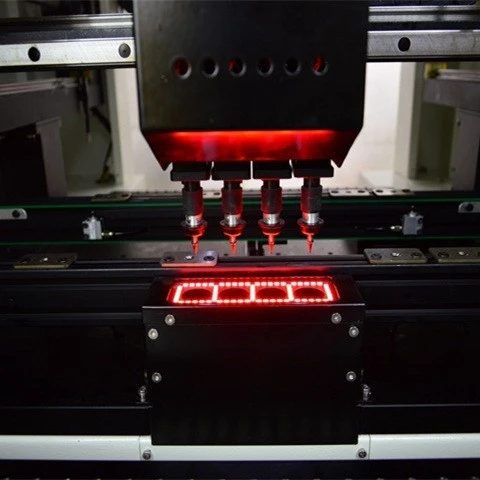
SMT assembly, however, is a bit more complex but also more efficient. First, a stencil is used to apply solder paste to the pads on the PCB. The solder paste is a mixture of tiny solder particles and flux. Then, pick - and - place machines are used to place the components onto the solder paste. These machines are incredibly precise and can place components at a very high speed. After the components are placed, the PCB goes through a reflow oven. In the reflow oven, the solder paste is heated until it melts, creating a strong electrical connection between the components and the PCB.
If you're interested in the machines used in SMT assembly, check out our SMT PNP Machine, Pick and Place SMT Machines, and SMT Chip Mounting Machine. These machines are essential for a smooth and efficient SMT assembly process.
Electrical Performance
When it comes to electrical performance, both technologies have their pros and cons. Through - hole components generally have better mechanical stability. The leads that are inserted through the holes in the PCB provide a strong physical connection, which can be beneficial in applications where the board might be subject to vibrations or mechanical stress.
SMT components, on the other hand, can offer better high - frequency performance. Since the components are placed directly on the surface of the PCB, there is less lead inductance and capacitance. This means that SMT is often the preferred choice for high - speed digital circuits and radio - frequency applications.
Cost Considerations
Cost is always an important factor in any electronics project. Through - hole technology can be more expensive in some cases. The larger components themselves can cost more, and the manual assembly process can be labor - intensive, which adds to the overall cost. Additionally, the wave soldering process can be more wasteful in terms of solder usage.
SMT, on the other hand, can be more cost - effective in high - volume production. The automated pick - and - place machines can place components very quickly, reducing labor costs. Also, the reflow soldering process is more precise, which means less waste. However, the initial investment in SMT equipment can be quite high, so it might not be the best choice for small - scale projects.

Design Flexibility
In terms of design flexibility, SMT has an edge. With SMT, you can place components on both sides of the PCB, which is not always possible with through - hole technology. This allows for even more compact and creative PCB designs. You can also use different types of surface - mount components, such as ball grid array (BGA) packages, which offer a high number of connections in a small space.
Through - hole technology, while less flexible in some ways, still has its place. It's easier to prototype with through - hole components because you can manually insert them and test the circuit without the need for specialized equipment. This makes it a good choice for hobbyists and small - scale projects where quick prototyping is important.
When to Choose Each Technology
So, when should you choose through - hole technology and when should you go for SMT? If you're working on a project that requires high mechanical stability, such as industrial equipment or automotive electronics, through - hole technology might be a good choice. The strong physical connections provided by the leads can withstand the vibrations and stresses that these applications are subject to.
If you're working on a project where space is limited, high - frequency performance is important, or you need a high component density, then SMT is the way to go. It's also a great choice for high - volume production, as it can offer cost savings in the long run.
Conclusion
In conclusion, both SMT Surface Mount and through - hole technology have their own unique advantages and disadvantages. As a supplier of SMT technology, I'm obviously a big fan of SMT, but I also recognize that through - hole technology still has its place in the electronics industry.
If you're considering using SMT in your next project, I'd love to have a chat with you. Whether you're looking for advice on component selection, assembly processes, or need to source SMT equipment, I'm here to help. Just reach out, and we can start a discussion about how SMT can benefit your project.
References
- "Electronics Assembly Technology Handbook"
- "Printed Circuit Board Design and Manufacturing"


