

What is the throughput of a typical SMT production line with related machines?
In the realm of electronics manufacturing, Surface Mount Technology (SMT) has revolutionized the way printed circuit boards (PCBs) are assembled. A typical SMT production line consists of multiple machines working in harmony to ensure efficient and high - quality PCB assembly. As a trusted supplier of SMT related machines, I am often asked about the throughput of a typical SMT production line and how our machines contribute to it.
Components of a typical SMT production line
A standard SMT production line usually includes a solder paste printer, pick - and - place machines, a reflow oven, and various inspection devices. Each machine plays a crucial role in the PCB assembly process, and their integration and performance directly impact the overall throughput of the line.
The solder paste printer is the first step in the SMT process. It applies a precise amount of solder paste onto the PCB pads. The throughput of a solder paste printer is measured by the number of PCBs it can print per hour. High - end printers can achieve a throughput of up to 100 to 150 printed circuit boards per hour, depending on the complexity of the PCB layout and the speed settings of the printer.
Pick - and - place machines are the heart of the SMT production line. These machines pick up electronic components from feeders and place them onto the PCB with high precision. The throughput of pick - and - place machines is typically measured in components per hour (CPH). Modern high - speed pick - and - place machines can place over 100,000 components per hour. However, the actual throughput can be affected by factors such as the size and type of components, the placement density on the PCB, and the programming efficiency.
After the components are placed on the PCB, it enters the reflow oven. The reflow oven heats the PCB to melt the solder paste, creating a permanent electrical and mechanical connection between the components and the PCB. The throughput of a reflow oven is determined by the conveyor speed and the length of the oven. A well - designed reflow oven can handle 50 to 100 PCBs per hour, depending on the oven's specifications and the PCB size.
Inspection devices, such as Automated Optical Inspection (AOI) machines and X - ray inspection machines, are used to ensure the quality of the assembled PCBs. These machines can detect defects such as misaligned components, missing components, and solder bridging. Although their primary function is quality control rather than production, their efficiency can also impact the overall throughput of the SMT production line.
Impact of related machines on throughput
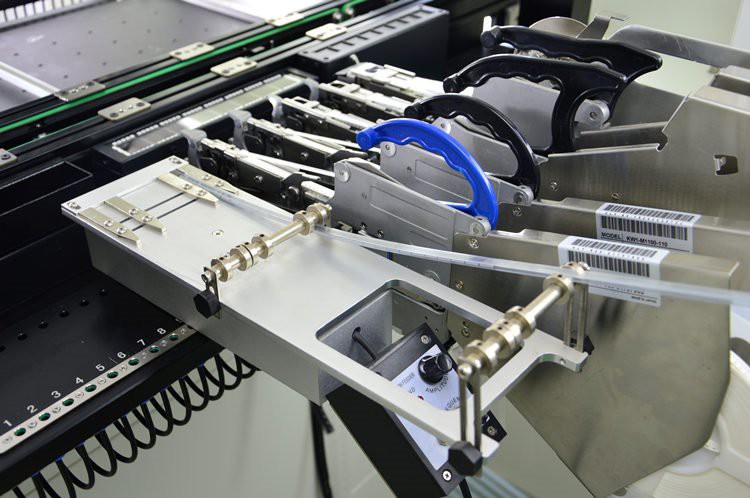
As an SMT related machines supplier, we offer a range of products that can significantly enhance the throughput of an SMT production line. For example, our SMT Feeder is designed to provide a stable and efficient supply of electronic components to pick - and - place machines. With features like high - speed component feeding and accurate tape advancing, our SMT feeders can improve the pick - and - place efficiency, thereby increasing the overall throughput of the production line.
Our Feeder Storage Car is another valuable addition to an SMT production line. It allows for easy storage and transportation of feeders, reducing the time spent on feeder setup and changeover. By minimizing the downtime associated with feeder management, the Feeder Storage Car can help increase the productivity and throughput of the SMT production process.
In some cases, when there are issues with the assembly of Ball Grid Array (BGA) components, our BGA Rework Station can come in handy. This machine provides a precise and controlled environment for BGA component replacement and rework. By quickly resolving BGA - related issues, the BGA Rework Station can prevent production bottlenecks and maintain a high throughput of the SMT production line.
Calculating the throughput of an SMT production line
Calculating the throughput of an SMT production line is not a straightforward task as it depends on multiple factors. One way to estimate the throughput is to identify the bottleneck machine in the production line. The bottleneck machine is the one that operates at the slowest speed and limits the overall production rate of the line.
For example, if the pick - and - place machine can place 80,000 components per hour but the solder paste printer can only print 80 PCBs per hour, and assuming each PCB has 1000 components on average, the pick - and - place machine's capacity is more than sufficient. In this case, the solder paste printer becomes the bottleneck, and the overall throughput of the production line will be limited by its printing speed, i.e., 80 PCBs per hour.
To optimize the throughput of an SMT production line, it is essential to balance the performance of all the machines in the line. This may involve upgrading slower machines, improving the programming and setup processes, or adjusting the production workflow.
Importance of throughput in SMT manufacturing
High throughput in an SMT production line is crucial for several reasons. Firstly, it allows manufacturers to meet tight production deadlines. In the fast - paced electronics industry, getting products to the market quickly is a key competitive advantage. A high - throughput production line can produce more PCBs in a shorter period, enabling manufacturers to fulfill large orders on time.
Secondly, high throughput can lead to cost savings. By producing more units per hour, the fixed costs of the production line, such as equipment depreciation, labor, and overheads, can be spread over a larger number of products. This results in a lower cost per unit, increasing the profitability of the manufacturing operation.
Lastly, high throughput can also improve the quality of the products. A well - optimized production line with high throughput is more likely to have better - controlled processes. This reduces the likelihood of errors and defects, leading to higher - quality PCB assemblies.
How to choose the right machines for high throughput
When selecting SMT related machines to achieve high throughput, several factors need to be considered. Firstly, the speed and accuracy of the machines are of utmost importance. Fast - operating machines are essential for high throughput, but they must also be able to place components with high precision to ensure product quality.
Secondly, the flexibility of the machines is also crucial. The electronics industry is constantly evolving, and new component types and PCB designs are emerging all the time. Machines that can easily adapt to these changes, such as being able to handle different component sizes and shapes, will be more valuable in maintaining high throughput in the long run.
Thirdly, the ease of use and maintenance of the machines should not be overlooked. Machines that are easy to operate and maintain will have less downtime due to operator errors and maintenance requirements. This will contribute to a more consistent and high - throughput production environment.
Promoting contact for procurement and negotiation
If you are looking to enhance the throughput of your SMT production line or are in the market for high - quality SMT related machines, I encourage you to reach out to us. As a dedicated supplier of SMT related machines, we have a deep understanding of the industry and can provide you with customized solutions tailored to your specific needs. Whether you are interested in our SMT Feeders, Feeder Storage Cars, or BGA Rework Stations, we are ready to assist you in making the right choices for your production line. Contact us today to start a procurement negotiation and take your SMT production to the next level.

References
- "SMT Equipment Handbook", Electronics Manufacturing Association.
- "Surface Mount Technology: Principles and Practice", John Wiley & Sons.
- Industry whitepapers on SMT production line optimization and throughput improvement.


